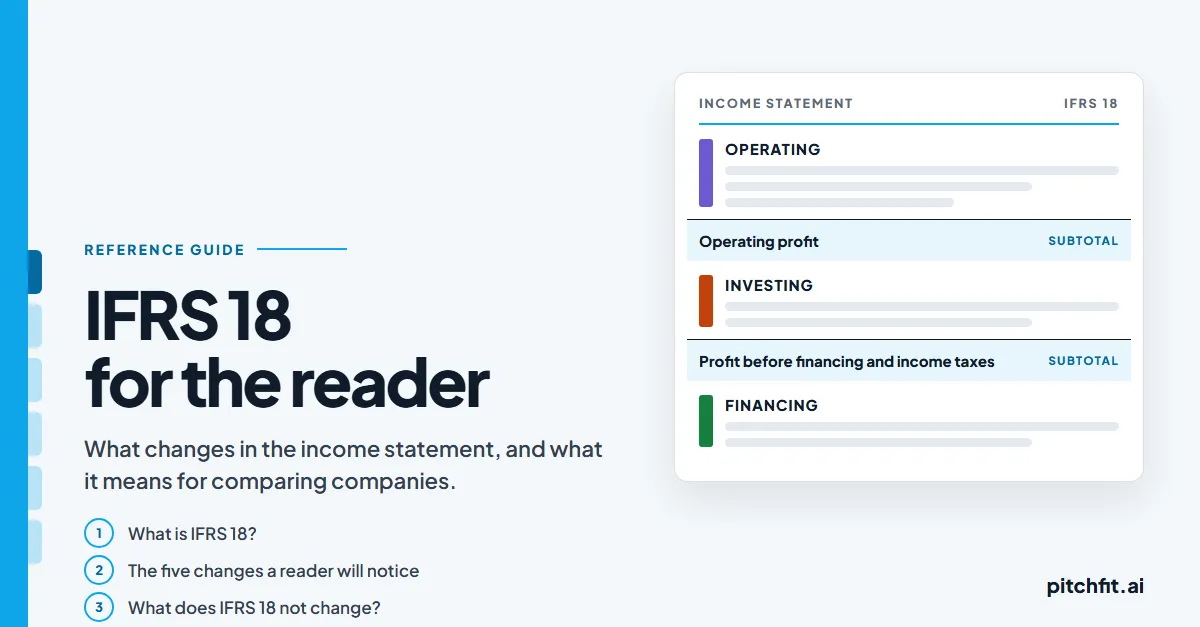
Gearing Ratio Explained: Why BP Is 23% Geared, or 47%, Depending on One Footnote
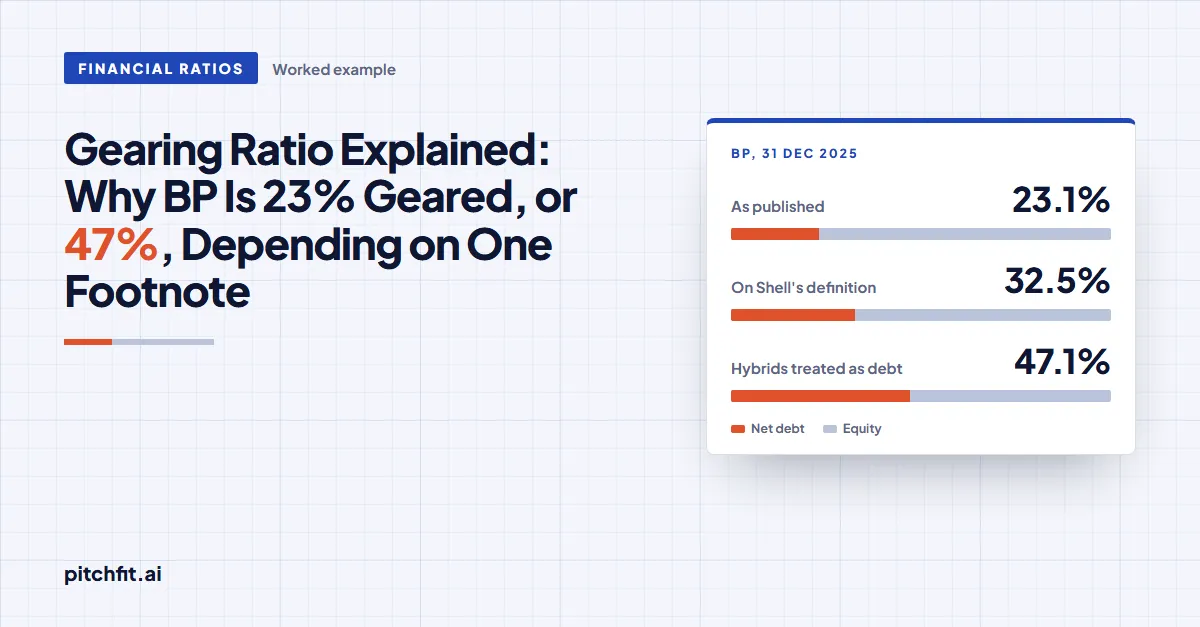
BP reports 23.1% gearing for 2025. On Shell's definition it is 32.5%; with hybrid bonds counted as debt, 47.1%. The four oil majors on one definition.
If you read nothing else
- BP says its gearing for 2025 is 23.1%. Measure the same balance sheet the way Shell measures its own, and it is 32.5%. Treat BP's hybrid bonds as debt, as the bond market does, and it is 47.1%.
- BP did not change between those three numbers. The definition did.
- Rebase rebuilds gearing for every company on one definition, from the balance sheet itself. The number you compare is the same number for everyone.
| 31 Dec 2025, USD million | Leases counted as debt? | Hybrid bonds counted as equity? | Net debt | Equity | Gearing |
|---|---|---|---|---|---|
| BP, as published | No | Yes | 22,182 | 74,000 | 23.1% |
| BP, on Shell's definition | Yes | Yes (unchanged) | 35,686 | 74,000 | 32.5% |
| BP, hybrids treated as debt | Yes | No | 51,641 | 58,045 | 47.1% |
| Shell, as published | Yes | Shell has none | 45,687 | 175,319 | 20.7% |
Shell counts leases as debt and has no hybrid bonds. So the fair comparison is the second row against Shell: 32.5% against 20.7%. The third row is a further judgement about hybrids, and it applies to BP alone.
What is gearing?
Gearing tells you how much of a company is funded by borrowing. It is net debt (what the company owes, minus the cash it holds) divided by net debt plus shareholders' equity. A gearing of 20% means a fifth of the money in the business came from lenders.
Lenders, rating agencies and boards all watch it. Every oil major sets a target against it.
The ratio has only two inputs: net debt and equity. The difficulty is that each company decides for itself what goes into both.
Why does BP's number move so far?
Two decisions. Both are disclosed, both are defensible, and both are easy to miss.
Leases. Under IFRS, a lease is a liability on the balance sheet, much like a loan. Shell counts its lease liabilities as debt. BP leaves its 14.6 billion dollars of leases out of the headline number, and publishes a second figure further down the release: "net debt including leases". Put the leases in, change nothing else, and BP's gearing goes from 23.1% to 32.5%.
Hybrid bonds. BP has 16 billion dollars of bonds with no maturity date. Because BP can defer the coupon indefinitely, the accounting rules count them as equity. Rating agencies give them only partial equity credit. Bond investors price them as subordinated debt. Shell has none. Move BP's hybrids from equity to debt, with the leases already in, and gearing goes from 32.5% to 47.1%.
So the fair comparison with Shell is not 23.1% against 20.7%. It is at least 32.5% against 20.7%. That is a twelve-point gap, not a two-point one, before the hybrid question is even asked.
Working on a peer comparison? Rebase puts every balance sheet on one definition before the first ratio is shown. Join the waitlist to be first in.
Are the US majors really less geared?
ExxonMobil publishes 11.0% and Chevron 15.6%. Each uses a definition of its own.
Neither counts operating leases as debt. An IFRS company must. Add the lease liabilities from their own 10-K notes (6.8 billion at Exxon, 6.0 billion at Chevron) and the two ratios become 13.0% and 17.4%.
Chevron also uses only the equity that belongs to its own shareholders. Shell and Exxon include the share that belongs to minority investors in their subsidiaries. Put Chevron on the same basis and its ratio moves again.
Four companies, four footnotes. A table that lists 11.0%, 15.6%, 20.7% and 23.1% in one column has compared the footnotes, not the balance sheets.
What does the comparison look like on one definition?
One set of rules for all four: leases count as debt, equity includes minority interests, cash is deducted in full, and hybrids are shown both ways.
| Net debt, leases in | Equity | Gearing, one definition | Hybrids as debt | |
|---|---|---|---|---|
| ExxonMobil | 39,690 | 266,626 | 13.0% | 13.0% |
| Chevron | 40,446 | 192,176 | 17.4% | 17.4% |
| Shell | 45,687 | 175,319 | 20.7% | 20.7% |
| BP | 35,686 | 74,000 | 32.5% | 47.1% |
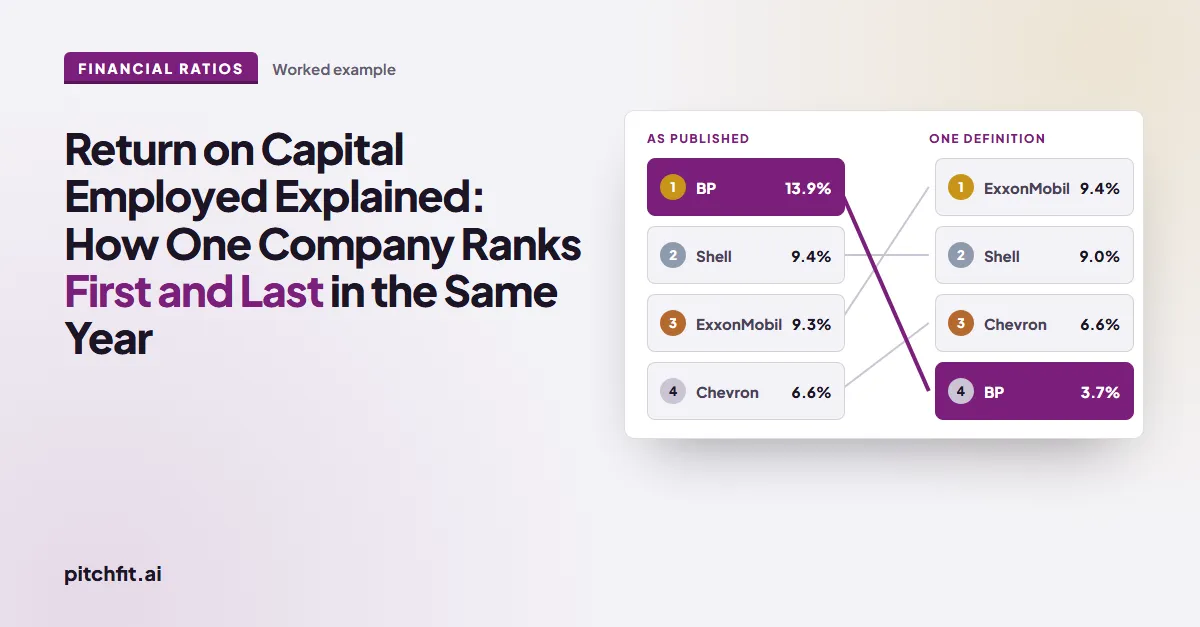
The order does not change. The distances do. And the distances are what a lender or an investor is actually pricing.
How does Rebase do this?
It does not copy the ratio a company prints. It maps every balance sheet, IFRS or US GAAP, onto one template and builds the ratio from the same lines for everyone:
- Lease liabilities have their own line and count as debt for all.
- Hybrid bonds have their own line. Gearing is shown with them in equity and with them as debt.
- Equity is total equity, minority interests included, for all.
- Cash, deposits and marketable securities are deducted on one rule for all.
- Every figure links back to the printed line it came from, so any treatment can be checked and reversed.
The ratio a company prints is where the analysis starts. It is not where it ends.
See your peer set on one definition. Join the Rebase waitlist. Early members get their first comparison built with us.
Frequently asked questions
What is a good gearing ratio?
There is no universal threshold. Oil majors typically target 15% to 30% through the cycle. Utilities run higher; technology companies far lower. The useful comparison is against peers on the same definition, and against the company's own history.
Why should leases count as debt?
A lease commits the company to fixed payments it cannot avoid, exactly as a loan does. Under IFRS 16, lease liabilities sit on the balance sheet beside borrowings. Leaving them out of net debt understates what the company owes.
Are hybrid bonds debt or equity?
Both, depending on who is asking. Accountants treat them as equity when the issuer can defer the coupon indefinitely. Rating agencies give partial equity credit. Bondholders price them as subordinated debt. A sound comparison shows both views rather than choosing one silently.
Is lower gearing always better?
No. Very low gearing can mean a company is under-using cheap debt. The question is whether the level is sustainable through the cycle and consistent with its credit-rating target.
Can IFRS and US GAAP companies be compared on gearing?
Only after both are put on one definition. The two frameworks treat leases, hybrids and minority interests differently, and each company then adds choices of its own.
Sources: Shell plc, fourth quarter and full year 2025 unaudited results, net debt and gearing; bp p.l.c., fourth quarter and full year 2025 results, net debt note, gearing including leases, hybrid bonds in equity; ExxonMobil, 2025 results and FY2025 Form 10-K lease note; Chevron, fourth quarter 2025 results and FY2025 Form 10-K lease note. BP's hybrids-as-debt figure is computed from BP's disclosed net debt including leases and hybrid bond balance. Operating lease liabilities for ExxonMobil (6,834) and Chevron (5,985) at 31 December 2025 from their lease notes; finance leases are already within reported debt.
Advised on major restructuring and transformation programs at Oliver Wyman before building Rebase to end the "three answers" problem for good.
 Restructuring
 Financial ratios
 Financial ratios
 IFRS 18 Watch
 IFRS 18 WatchRestructuringFinancial ratiosFinancial ratiosIFRS 18 WatchIFRS 18 Watch